



Why Bed Bugs Are Still Active During Fall in Illinois and Wisconsin
Bed bugs remain active during fall in Illinois and Wisconsin. Discover why infestations persist and how to protect your home from these pests.
Think bed bugs disappear when temperatures drop? Think again.
As cooler weather arrives in Illinois and Wisconsin, many homeowners expect household pests to become less active. While some insects slow down during fall, bed bugs can continue feeding and reproducing inside heated homes.
Seasonal travel, secondhand furniture, and comfortable indoor temperatures can also create opportunities for infestations to develop unnoticed. Unfortunately, waiting for freezing weather is not an effective way to eliminate these pests.
Understanding why bed bugs in fall remain a concern can help homeowners recognize early warning signs and take appropriate precautions. But why doesn't cooler weather stop bed bugs from spreading?
Why Bed Bugs Don't Disappear When Fall Temperatures Drop

Bed bugs survive indoors because residential heating systems maintain temperatures that support their activity. Unlike outdoor pests exposed to seasonal weather changes, bed bugs typically remain protected inside buildings.
Heated Homes Support Bed Bug Activity
Bed bugs hide in mattresses, bed frames, upholstered furniture, and other protected spaces near sleeping areas.
When indoor temperatures remain comfortable, these insects can continue feeding and developing even as outdoor temperatures decline.
Ordinary fall weather rarely exposes indoor infestations to temperatures low enough to eliminate them.
Bed Bugs Can Survive Without Feeding
Bed bugs can survive for extended periods between blood meals, although survival depends on temperature, humidity, and other conditions.
This ability allows hidden insects to persist in temporarily unoccupied bedrooms or furniture.
Homeowners should never assume an infestation will disappear simply because the weather becomes colder.
How Fall Travel and Holiday Preparations Increase Bed Bug Exposure
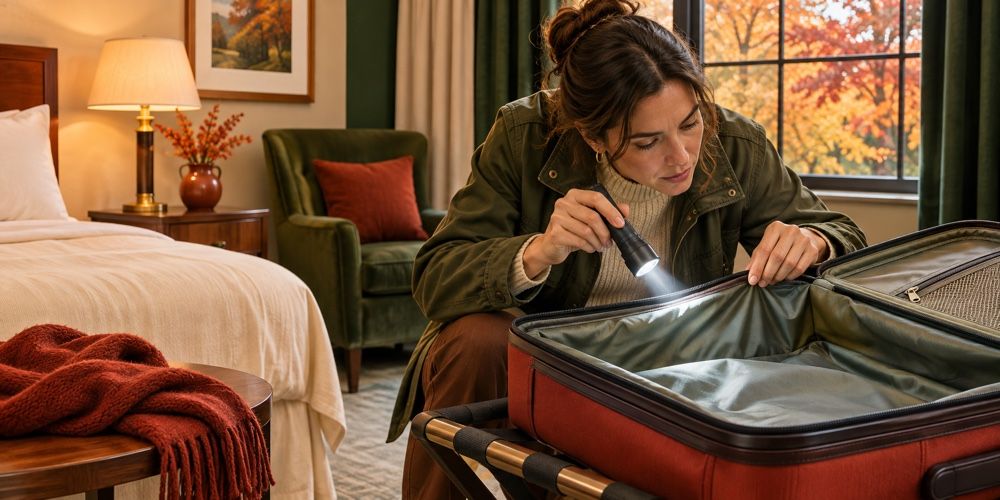
Fall vacations, family visits, and holiday preparations can create additional opportunities for bed bugs to enter homes. These insects primarily spread by hitchhiking through belongings rather than traveling long distances independently.
Luggage and Personal Belongings Can Transport Bed Bugs
Hotels, vacation rentals, and shared accommodations may expose travelers to bed bugs when an infestation is present.
The insects can hide inside suitcase seams, backpacks, clothing, and other belongings.
After returning home, inspect luggage carefully before storing it. Pay attention to zippers, pockets, seams, and fabric folds.
Secondhand Furniture Requires Careful Inspection
Used mattresses, couches, recliners, and wooden furniture may contain hidden bed bugs.
Before bringing secondhand items indoors, inspect upholstery seams, joints, cracks, and undersides.
The U.S. Environmental Protection Agency's guidance on protecting your home (n.d.-b) recommends examining secondhand furniture and taking precautions when traveling.
Early Warning Signs of Bed Bugs You Should Never Ignore
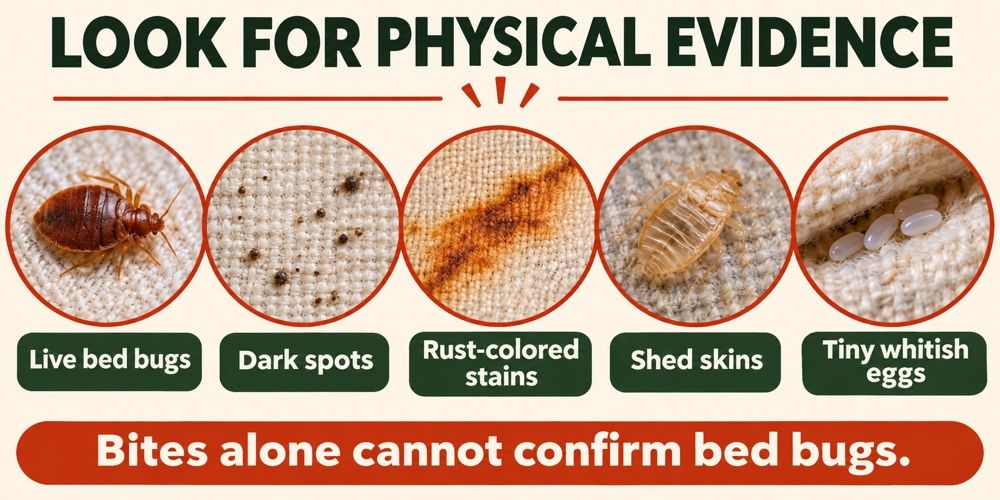
Recognizing an infestation early can help prevent bed bugs from spreading into additional rooms. Because these insects remain hidden for much of the day, homeowners should focus on physical evidence.
Common Signs Around Sleeping Areas
Look for:
- Small reddish-brown insects near mattresses and furniture
- Dark fecal spots along mattress seams
- Rust-colored stains on bedding
- Pale shed skins near hiding places
- Tiny whitish eggs inside cracks and crevices
The EPA's bed bug identification guidance (n.d.-a) identifies these signs as useful indicators of possible activity.
Why Bites Alone Cannot Confirm Bed Bugs
Some people experience noticeable skin reactions after bed bug bites, while others show no visible symptoms.
Bites may also resemble irritation caused by other insects or skin conditions.
Use a flashlight to inspect mattress seams, headboards, bed frames, and nearby furniture joints. If suspicious insects appear, collect a specimen for identification.
Why Professional Bed Bug Treatment Matters During Fall
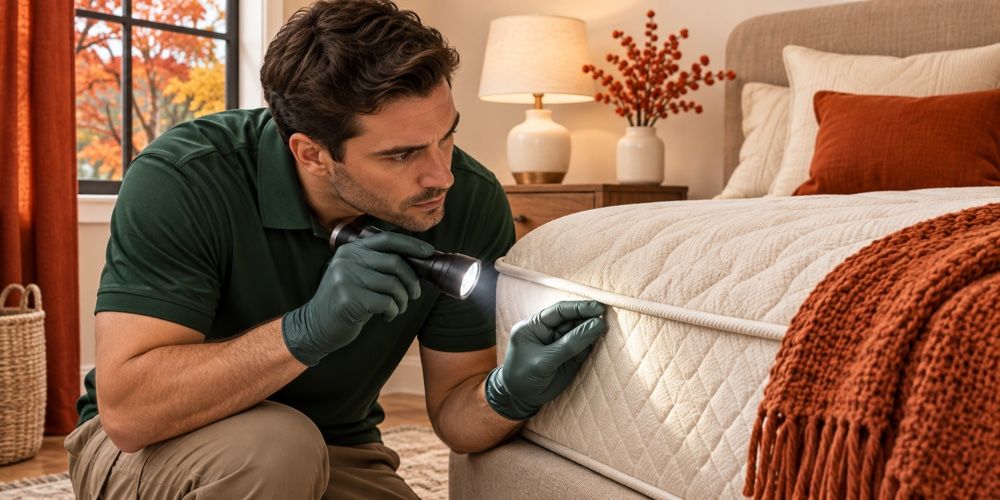
Delaying treatment until winter can give an established infestation more time to develop. Professional inspections help identify affected areas and determine which control methods are appropriate.
Professional Inspections Identify Hidden Activity
Bed bugs can occupy narrow spaces that homeowners may overlook during routine cleaning.
A qualified technician can inspect sleeping areas, furniture, and surrounding structures for evidence of activity.
For homeowners experiencing recurring warning signs, consulting a bed bug exterminator in Chicago can help determine whether professional treatment is necessary.
Heat and Conventional Treatments Address Infestations
Professional heat treatment uses specialized equipment and temperature monitoring to expose bed bugs to lethal heat.
Conventional treatments may involve appropriately applied, EPA-registered insecticides and additional control measures.
The EPA's bed bug prevention and control recommendations (n.d.-c) emphasize comprehensive management rather than relying on a single household remedy.
Follow-up monitoring helps determine whether additional treatment is needed.
Practical Fall Bed Bug Prevention Tips for Illinois and Wisconsin Homes
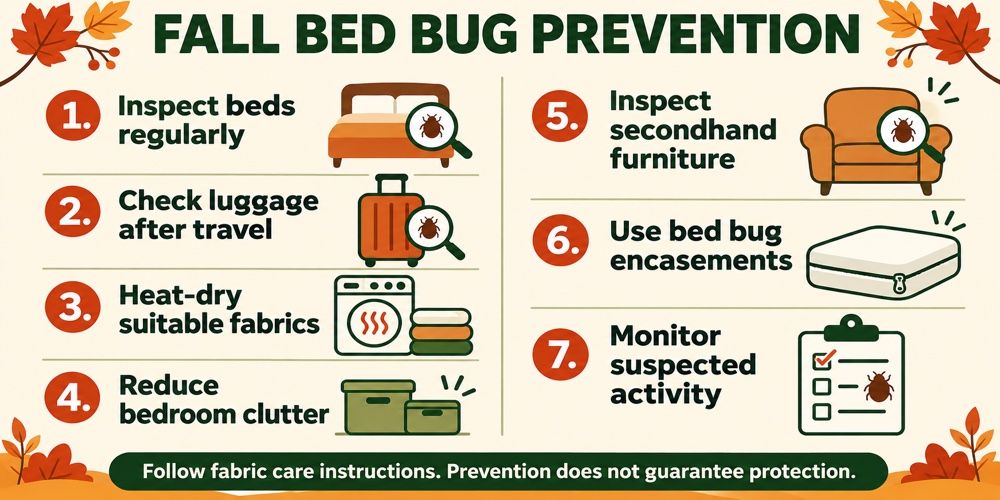
Effective prevention requires consistent monitoring, careful handling of belongings, and early identification of suspicious activity. Although routine cleaning helps maintain a comfortable home, cleanliness alone cannot prevent bed bugs because these insects spread through infested belongings and furniture.
Homeowners can reduce their exposure risk by following these precautions:
- Inspect mattresses and bed frames regularly: Examine seams, headboards, furniture joints, and nearby cracks for physical evidence.
- Check luggage after traveling: Inspect suitcase seams, zippers, and pockets before putting luggage into storage.
- Heat-dry suitable clothing and bedding: Use a high-temperature dryer cycle for 30 minutes when fabric care instructions permit. The EPA identifies this as an effective method for killing bed bugs and their eggs in suitable items.
- Reduce clutter around sleeping areas: Remove unnecessary belongings to limit hiding places and improve inspection access.
- Inspect secondhand furniture: Examine upholstered and wooden furniture carefully before bringing it indoors.
- Use protective mattress encasements: Bed bug-specific encasements can help contain insects already inside mattresses and simplify monitoring, but they do not prevent every possible infestation.
- Monitor suspected activity: Use bed bug interceptors beneath suitable bed legs and perform regular visual inspections.
These practices are particularly useful during fall when travel, overnight visits, and furniture purchases may increase exposure opportunities. Consistent prevention cannot guarantee that bed bugs will never enter a home, but it can help homeowners recognize suspicious activity earlier and respond before an infestation becomes more extensive.
Why Waiting Until Winter Could Make Your Bed Bug Problem Worse
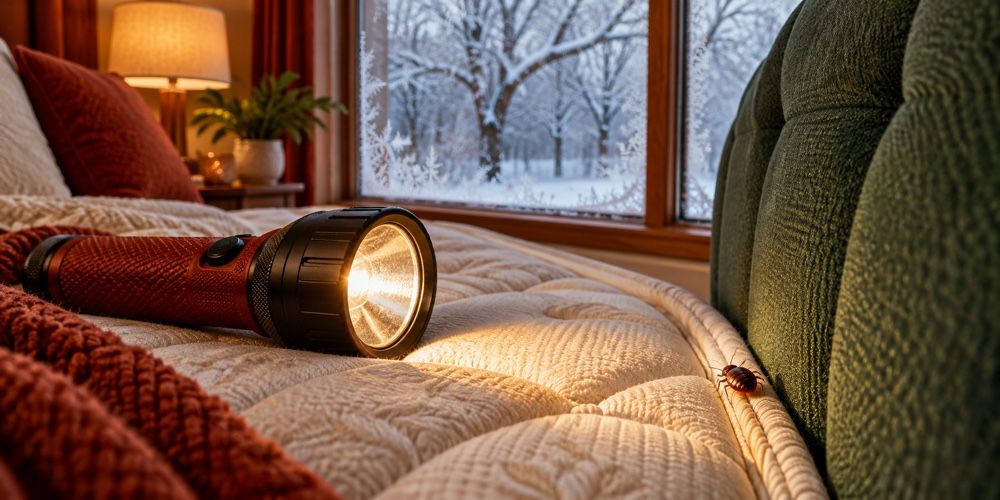
Waiting for winter is not a reliable bed bug control strategy. Heated homes provide protected environments where bed bugs may continue feeding and reproducing despite freezing outdoor conditions.
Delayed Treatment Allows Infestations to Spread
Bed bugs can move between nearby hiding places and rooms as an infestation develops.
In apartments, condominiums, and other shared housing, activity may also extend between neighboring units through structural openings or movement of belongings.
Moving potentially infested furniture into another room can unintentionally spread insects.
Freezing Outdoor Temperatures Are Not a Treatment Plan
Outdoor temperatures do not necessarily reach insects hiding inside heated walls, furniture, or bedding.
Attempting to freeze an entire home by shutting off the heating system is ineffective and potentially dangerous.
A timely inspection provides a more reliable starting point than waiting for seasonal weather changes.
Don't Let Cooler Weather Give You False Confidence
Bed bugs remain a year-round concern for homeowners throughout Illinois and Wisconsin. Cooler fall temperatures do not eliminate insects protected inside heated buildings.
Recognizing early warning signs, inspecting luggage after travel, and checking secondhand furniture can help reduce the risk of unnoticed infestations.
Regular household inspections and consistent preventive habits are especially important during the busy holiday season.
If you discover live bed bugs or recurring physical evidence, seek professional identification and treatment guidance promptly. Addressing an infestation early is a better approach than waiting for winter to solve a problem that may continue growing indoors.
References
U.S. Environmental Protection Agency. (n.d.-a). How to find bed bugs. https://www.epa.gov/bedbugs/how-find-bed-bugs
U.S. Environmental Protection Agency. (n.d.-b). Protecting your home from bed bugs. https://www.epa.gov/bedbugs/protecting-your-home-bed-bugs
U.S. Environmental Protection Agency. (n.d.-c). Top ten tips to prevent or control bed bugs. https://www.epa.gov/bedbugs/top-ten-tips-prevent-or-control-bed-bugs