



How to Prepare Your Home for Professional Bed Bug Heat Treatment
Preparing for bed bug heat treatment? Learn how to protect belongings, follow preparation instructions, and get your home ready for professional service.
One preparation mistake could complicate your bed bug heat treatment.
Professional heat treatment uses specialized equipment to raise indoor temperatures to levels that can kill bed bugs and their eggs. However, successful treatment requires more than simply heating a room. Furniture placement, excessive clutter, and heat-sensitive belongings can affect how technicians prepare and treat the property.
Knowing how to prepare for bed bug treatment helps protect household items while allowing technicians to address hidden infestation areas. Because every property is different, preparation instructions may vary depending on the provider's equipment and treatment procedures.
So, what should homeowners do before their appointment to support a safe and effective treatment?
Why Proper Preparation Matters Before Bed Bug Heat Treatment
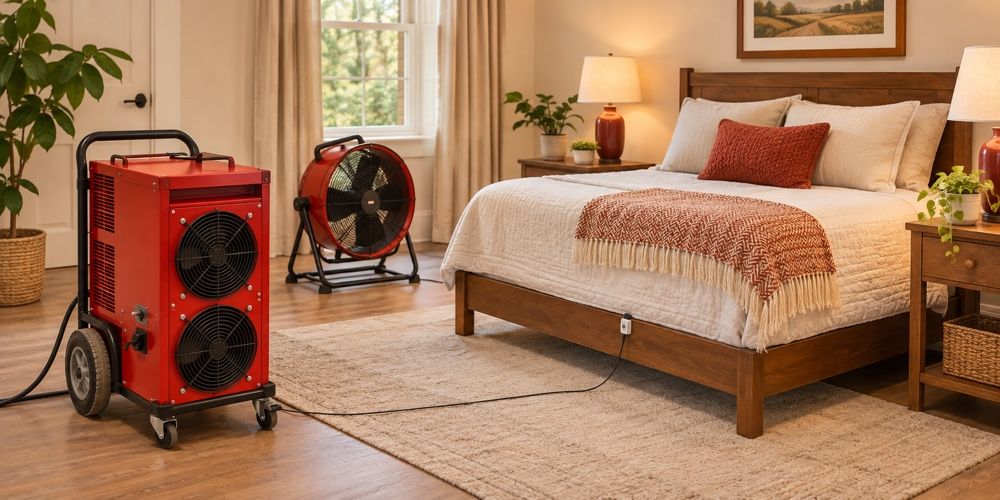
Preparation plays an important role in helping heat reach the areas where bed bugs hide. These insects commonly occupy mattress seams, furniture joints, and other protected spaces that may take longer to reach lethal temperatures.
Heat Must Reach Hidden Infestation Areas
Professional heat treatment uses specialized heaters, air circulation equipment, and temperature sensors to create controlled treatment conditions.
According to the U.S. Environmental Protection Agency's guidance on do-it-yourself bed bug control (n.d.-a), sustained exposure to sufficiently high temperatures can kill bed bugs and their eggs.
However, room air temperature alone does not establish that every hiding place has reached an effective temperature.
Furniture placement, packed belongings, and restricted airflow may influence heat distribution.
Professional Instructions Are Essential
Technicians may recommend repositioning furniture, reducing clutter, or protecting specific belongings before treatment.
Homeowners should never attempt to heat their homes using ovens, space heaters, or ordinary household appliances.
These methods are unreliable for bed bug elimination and can create serious fire hazards.
Following a provider-specific preparation checklist is the safest approach.
What to Do Before Your Scheduled Bed Bug Heat Treatment
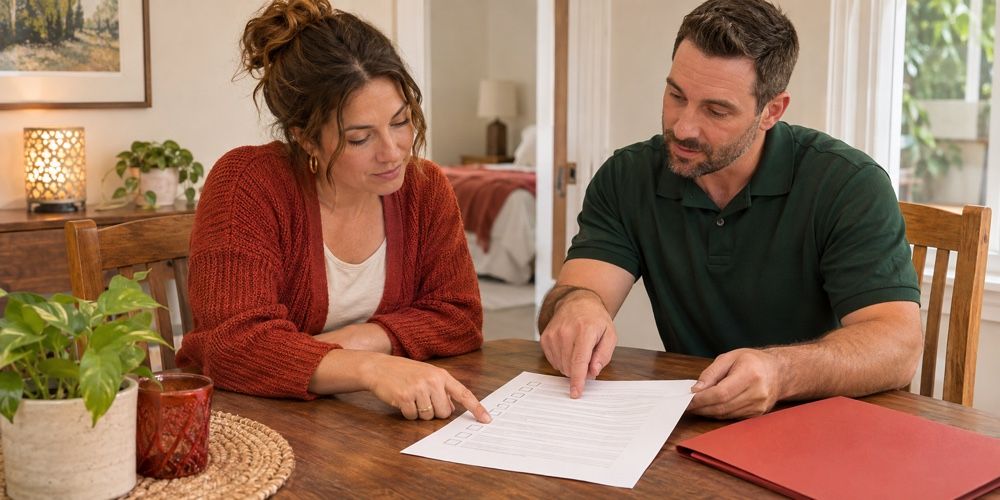
Before treatment day, homeowners should review their technician's instructions and identify anything that could complicate the process. Early communication allows the provider to address special concerns before equipment arrives.
Review Appointment Requirements
Confirm the treatment date, estimated duration, preparation deadline, and expected reentry instructions.
Ask whether bedrooms, closets, storage areas, and other spaces need to be accessible.
If the property contains crowded rooms or difficult-to-reach furniture, notify the technician in advance.
Identify Belongings That Need Special Attention
Walk through the treatment areas and identify delicate materials, valuable possessions, and products with temperature restrictions.
Ask which items should remain in place and which require special handling.
Do not assume that every electronic device or personal belonging must be removed.
The provider should explain how potentially infested items can be handled without spreading bed bugs.
Bed Bug Heat Treatment Preparation Checklist for Homeowners
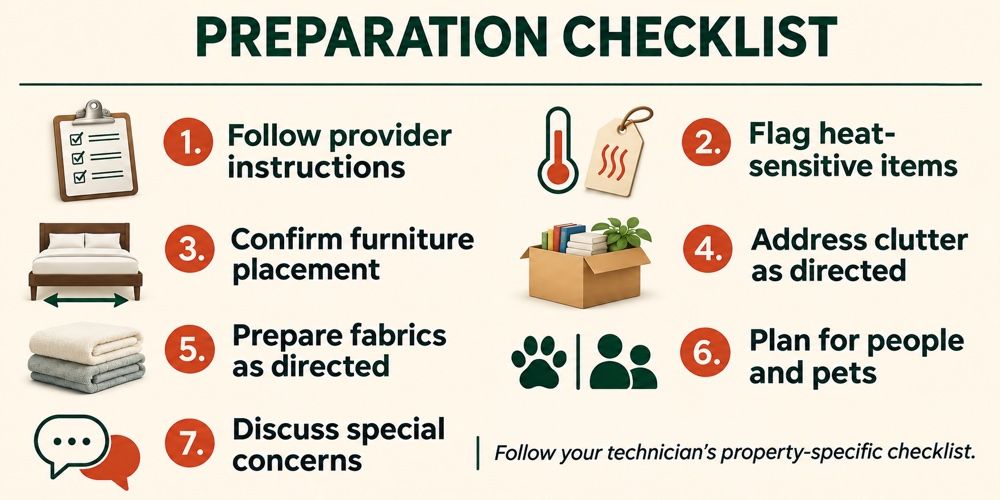
A practical bed bug heat treatment preparation checklist helps homeowners organize essential tasks without unnecessarily disturbing hidden insects. The goal is to make the property accessible while avoiding the accidental movement of bed bugs into untreated locations.
Use the following checklist before your appointment:
- Review professional instructions: Follow the treatment provider's specific preparation requirements rather than relying solely on generic online advice.
- Identify heat-sensitive belongings: Ask about electronics, candles, cosmetics, medications, batteries, and other items that may be damaged by elevated temperatures.
- Discuss furniture placement: Confirm whether beds, couches, or other furnishings need repositioning to improve heat circulation.
- Address clutter carefully: Reduce obstacles as directed, but avoid transferring potentially infested belongings into unaffected rooms.
- Prepare clothing and linens as directed: Follow instructions for laundering, drying, bagging, or leaving fabrics inside the treatment area.
- Plan for pets and occupants: Arrange for everyone to leave when required and confirm when reentry is permitted.
- Communicate special concerns: Inform technicians about artwork, musical instruments, delicate finishes, valuable items, and inaccessible areas.
The EPA's preparation guidance (n.d.-b) emphasizes preparation and cooperation with pest management professionals.
Homeowners should not independently remove, discard, or relocate potentially infested items unless their treatment provider recommends doing so. Unnecessary movement can complicate the treatment process and increase the risk of spreading bed bugs.
What Items Should Be Removed Before Bed Bug Heat Treatment?
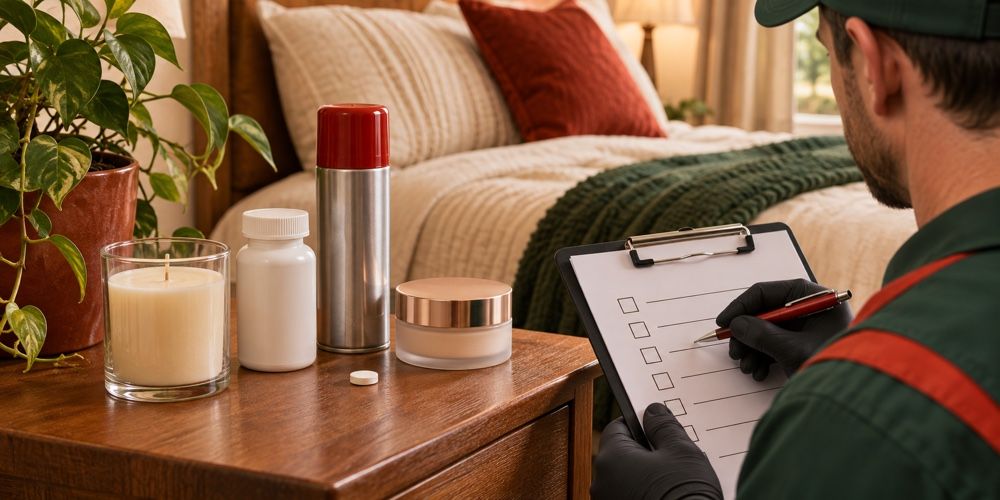
Some household belongings cannot safely tolerate prolonged exposure to elevated temperatures. However, removal requirements depend on the specific treatment procedure and the manufacturer's storage recommendations.
Medications and Heat-Sensitive Products
Items requiring special consideration may include:
- Prescription and over-the-counter medications
- Aerosol cans and pressurized containers
- Flammable liquids and hazardous chemicals
- Candles, wax products, and cosmetics
- Delicate artwork and temperature-sensitive materials
These products may require removal or alternative handling before treatment begins.
Always follow medication storage instructions and notify the technician about hazardous or pressurized materials.
Electronics and Personal Valuables
Certain electronics, batteries, plastics, adhesives, and delicate finishes may be sensitive to heat.
However, bed bugs can also hide inside electronic devices.
Removing potentially infested equipment without appropriate precautions may transport insects into another location.
Ask your provider whether these belongings should be inspected, isolated, protected, or treated separately.
Common Bed Bug Heat Treatment Preparation Mistakes to Avoid
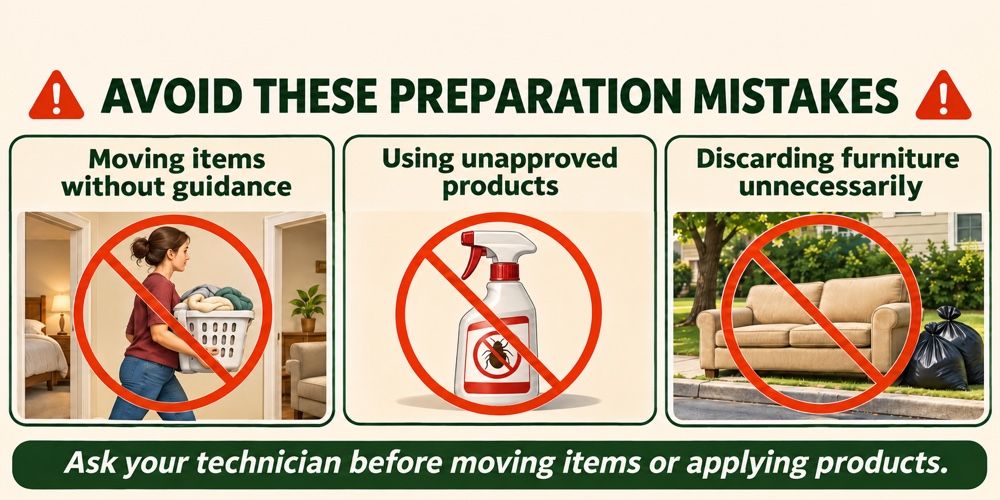
Even well-intentioned preparation can create problems when homeowners move belongings unnecessarily or ignore treatment instructions. Avoiding common mistakes helps technicians work more efficiently.
Moving Infested Belongings Between Rooms
Transferring mattresses, clothing, or furniture into untreated areas may spread bed bugs.
Similarly, placing potentially infested belongings inside vehicles or storage units without a containment plan can introduce insects elsewhere.
Keep items in their original locations unless your technician directs otherwise.
Using Unapproved Products Before Treatment
Applying additional pesticides, household chemicals, or flammable products before heat treatment may introduce safety concerns.
Homeowners should also avoid attempting to heat rooms independently.
The EPA's top ten bed bug control tips (n.d.-c) warn against ineffective household heating methods.
Discarding Furniture Unnecessarily
Discovering bed bugs does not automatically mean mattresses, couches, or other furniture must be discarded.
Many infested items can be treated using appropriate professional methods.
Ask the technician before disposing of furniture, especially because moving untreated items may spread insects.
How Professional Bed Bug Heat Treatment Works on Treatment Day
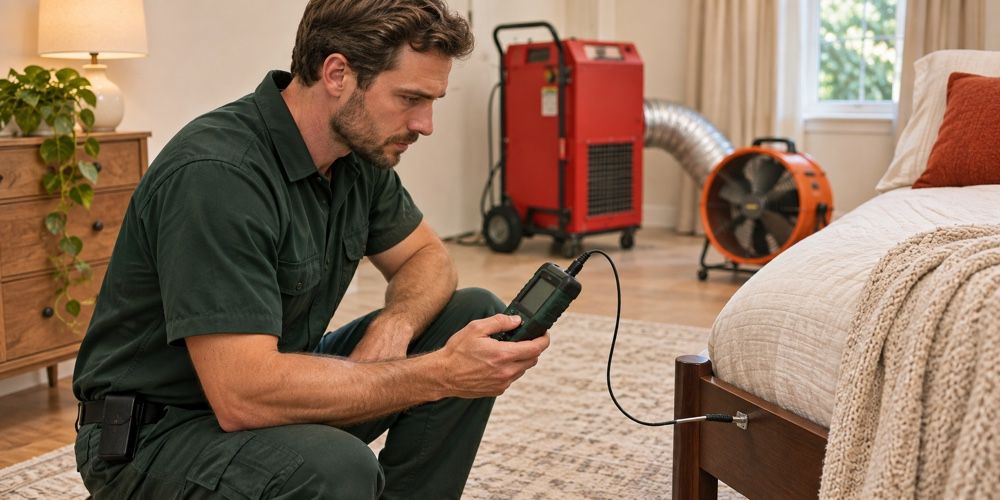
Treatment day typically involves a property assessment, equipment setup, controlled heating, and temperature monitoring. The exact process depends on the building's layout and the treatment provider's procedures.
Property Assessment and Equipment Setup
Technicians may review suspected infestation areas and confirm that preparation requirements have been completed.
Specialized heating equipment and fans are then positioned to distribute heat throughout designated treatment spaces.
For homeowners considering professional bed bug heat treatment, an initial assessment can help establish the appropriate treatment approach and preparation requirements.
Temperature Monitoring and Treatment Duration
Technicians use temperature sensors to monitor treatment conditions, including areas that may heat more slowly.
The goal is to achieve sufficient heat exposure where bed bugs and their eggs may be hiding.
Treatment duration varies depending on property size, insulation, contents, and other conditions.
Although heat treatment can eliminate exposed bed bugs, it does not create lasting protection against future introductions.
What to Expect After Professional Bed Bug Heat Treatment

After treatment, homeowners should follow the technician's instructions for reentry, cooling, and monitoring. Completing the heating process does not mean occupants should immediately return to the property.
Wait for Technician Clearance
Allow the property to cool as directed and wait until the provider confirms that reentry is permitted.
Some belongings may remain warm after treatment.
Avoid disturbing equipment or handling sensitive items until conditions are safe.
Continue Monitoring for Bed Bug Activity
Inspect previously affected sleeping areas for suspicious evidence.
If live insects or recurring activity appear, notify the provider rather than assuming the treatment has failed or attempting additional control methods independently.
Follow-up inspections may be necessary depending on the infestation and treatment results.
Continued monitoring and travel precautions can also help identify future introductions.
Understanding Bed Bug Heat Treatment Cost and Preparation Requirements
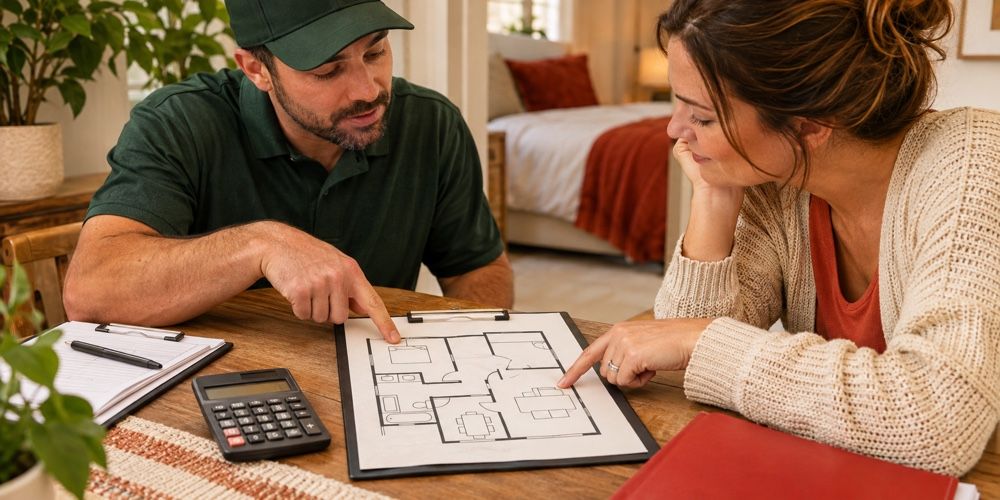
Bed bug heat treatment cost depends on several factors, including property size, infestation conditions, accessibility, and treatment complexity. Preparation requirements can also influence the work involved.
Factors That May Affect Treatment Pricing
Larger properties may require more equipment, additional labor, or longer heating periods.
Crowded rooms, complex layouts, and difficult-to-access spaces may also affect treatment planning.
Because conditions vary, homeowners should request a property-specific estimate instead of relying on generalized pricing.
Questions to Ask Before Scheduling
Before selecting a provider, ask what the quoted service includes.
Clarify whether the estimate covers preparation guidance, temperature monitoring, follow-up inspections, and any applicable treatment guarantee.
Also ask about possible additional charges and post-treatment responsibilities.
Comparing professional treatment plans provides a better basis for decision-making than choosing solely on price.
Prepare Properly for a More Effective Treatment
Preparing your home correctly helps support a professional bed bug heat treatment plan while protecting sensitive belongings and reducing unnecessary disruption.
A reliable bed bug heat treatment preparation checklist should address furniture access, heat-sensitive materials, clothing, clutter, and occupant safety.
Most importantly, follow the specific instructions provided by your treatment technician. Avoid relocating potentially infested belongings or applying additional products without professional guidance.
Clear communication before, during, and after treatment helps homeowners understand the process and respond appropriately to any remaining concerns.
If you suspect an infestation, schedule a professional assessment to determine the most suitable treatment approach and learn how to prepare your property safely.
References
U.S. Environmental Protection Agency. (n.d.-a). Do-it-yourself bed bug control. https://www.epa.gov/bedbugs/do-it-yourself-bed-bug-control
U.S. Environmental Protection Agency. (n.d.-b). Preparing for treatment against bed bugs. https://www.epa.gov/bedbugs/preparing-treatment-against-bed-bugs
U.S. Environmental Protection Agency. (n.d.-c). Top ten tips to prevent or control bed bugs. https://www.epa.gov/bedbugs/top-ten-tips-prevent-or-control-bed-bugs